When AI Becomes the First Filter: How D2C Brands Win or Disappear Before the Click
AI is quietly reshaping how people discover products. The shift is subtle but massive, happening upstream long before a shopper reaches a website, marketplace, or ad.
A purchase I made recently, combined with Google’s latest AI Shopping update, made this shift impossible to ignore.
I needed a stabilizer for a 300L fridge. Instead of browsing pages, comparing specs manually, or scanning reviews, I asked an AI assistant. It evaluated voltage ranges, warranty terms, review patterns, price–performance clarity, and brand reliability. Then it shortlisted two or three best-fit options.
I used Amazon and Flipkart only to validate delivery time and final pricing.
The real decision happened upstream, before I ever touched a marketplace or a search engine.
Across multiple D2C brands I’ve worked with, this behaviour is becoming default. More users are discovering and deciding through AI before touching traditional search or social.
This is the AI Shortlist Effect.
What Exactly Is the AI Shortlist Effect
The AI Shortlist Effect describes a fundamental shift:
AI now conducts the evaluation layer humans used to perform manually — and returns two or three best-fit choices.
It evaluates:
your use-case
product trade-offs
risks
clarity of value proposition
contradictions across your ecosystem
long-term reliability patterns
If your product is not in that shortlist, nothing downstream matters.
Not your PDP.
Not your performance ads.
Not your funnel.
Shortlisting is replacing ranking.
Discovery is moving from search engines to reasoning engines.
How AI Actually Evaluates Your Product/Platform
AI doesn’t evaluate like SEO. It evaluates like an operator.
It synthesises:
PDP attributes
marketplace listings
review sentiment
Q&A threads
influencer and YouTube evaluations
warranty clarity
schema markup
price history
variant consistency
return/refund data
risk patterns
This is where GEO (Generative Engine Optimization) and AEO (Answer Engine Optimization) play a role but only partially. They help structure product facts, but AI goes deeper. It cross-verifies your entire ecosystem and flags contradictions instantly.
Even query clustering, a common GEO technique, matters less than it used to because AI agents increasingly infer user intent even when prompts are vague.
This is no longer about keywords. It is about comprehensible product truth.
Why AEO and GEO Now Matter for D2C Brands
As AI assistants become the first filter in product discovery, two important disciplines have started to gain relevance: AEO (AI Engine Optimization) and GEO (Generative Engine Optimization). Both aim to improve how AI systems interpret, rank and reason about your products. While SEO focuses on how your website appears to humans on search results, AEO and GEO focus on how your structured data, content clarity, ecosystem consistency and trust signals are interpreted by machine reasoning. Brands that get this right appear more often in AI shortlists, get recommended in agentic workflows and capture intent-heavy demand long before a shopper reaches Google or a marketplace.
Google Is Quietly Rebuilding the Shopping Funnel Around AI Reasoning
Google’s recent AI Shopping update confirms what AI assistants have already been doing.
Users can describe a need, and Google responds with an AI-generated reasoning layer:
which options fit
why they fit
what to consider
what to avoid
how to choose
This is not a search results page. It is a decision layer.
Search is becoming evaluation.
Clicks are becoming verification.
AI Doesn’t Read Your Website. It Reads Your Entire Ecosystem
Most brands still assume that fixing the PDP is enough. AI does not treat a PDP as the single source of truth. Instead, it assembles a composite understanding of your product from everything that exists publicly across the internet. That includes your PDP, your marketplace listings, older product descriptions, size charts, policy pages, customer Q and A threads, schema markup, influencer videos, review summaries and even past return reasons. All of these surfaces become part of the same product story.
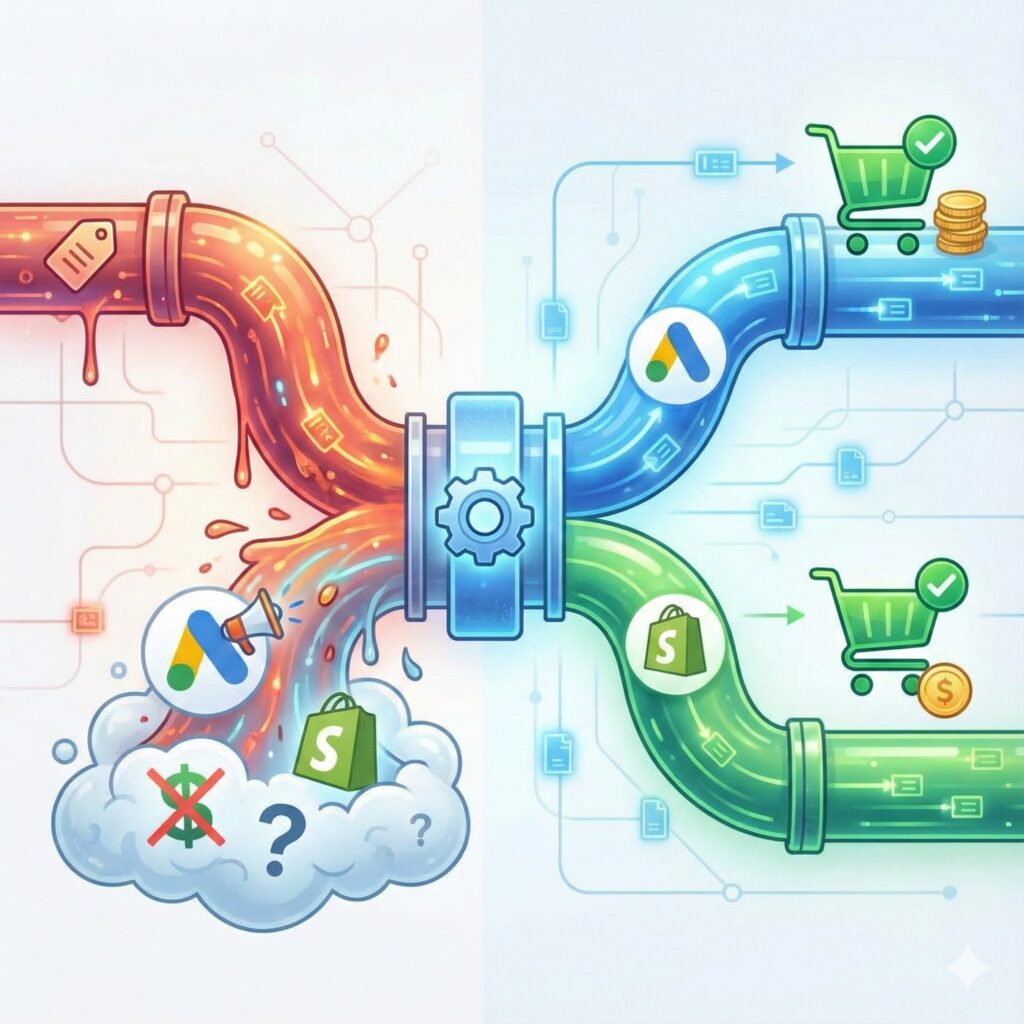
The problem is that most ecosystems do not tell the same story. A single mismatch in attributes or specifications can introduce uncertainty. For example, if one listing says 500W and another says 650W, AI has no way to know which version is correct. When signals conflict, recommendation confidence drops.
This is why data fragmentation is now a visibility penalty. Clarity has become a ranking signal. A brand is no longer defined only by design and messaging. It is defined by how consistent and unambiguous its public surfaces are. If AI cannot interpret your product with confidence, it will not promote you.
The Key Strategic Question for Operators
How do we make our product story unmistakably obvious to an AI system evaluating us in seconds?
This is where AEO and GEO help but only if combined with total ecosystem consistency.
Human UX closes the sale.
AI UX opens the door.
Why 1 to 5 Percent AI-Origin Demand Matters Even More Than It Looks
Today, only a small fraction of traffic originates from AI, often between 1 to 5 percent.
But this group behaves differently:
They convert 4–6x faster than SEO-origin traffic.
They compare fewer alternatives.
They have already made their decision before clicking.
They only use the PDP to validate.
Some brands already see 8–12 percent of new signups emerging from AI assistants.
This segment is small today but it is the highest-intent layer of the funnel. Ignoring it now means losing compounding advantage later.
This share will likely grow to 15–20 percent within two years.
AI Avoiders Still Matter but They No Longer Shape Visibility
Many consumers still prefer traditional search and do not trust AI recommendations.
They matter for checkout decisions — price, delivery time, policy clarity.
But they no longer influence early-phase visibility.
AI avoiders decide late.
AI seekers decide early.
Visibility is shaped upstream by the seekers.
The AI Visibility Loop
AI visibility compounds through a reinforcement cycle:
When AI understands you clearly, it recommends you more.
When users validate those recommendations, AI trusts you more.
When trust increases, visibility compounds.
This is the new organic growth engine.
Brands now grow through clarity loops, not just content or keyword loops.
A Simple AI Diagnostic That Reveals Your Visibility
A single minute of asking an AI assistant will show how well it understands your product.
Ask:
What are the best products for this use case?
Would you recommend mine?
What concerns do you see?
How does it compare to others?
What feels unclear or contradictory?
The gaps show up instantly. Most brands fail at this test.
5-Step AI Diagnostic
Run this monthly:
Ask which products best fit your use case.
Ask whether your product would be recommended and why.
Ask what risks or concerns AI sees in your product.
Ask AI to compare your product with competitors.
Ask what information about your product is missing or unclear.
This is your new visibility audit.
AI Reasoning Scorecard (0–5)
Evaluate your AI presence on:
Visibility — Did AI surface your product?
Consistency — Does your ecosystem show one unified truth?
Clarity — Are specs, variants, metrics unambiguous?
Risk Interpretation — How does AI interpret complaints?
Recommendation Confidence — Weak, moderate, strong?
You cannot win a shortlist with a score below 4.
What Should a D2C Brand Do Right Now
This is where AEO and GEO can help — but with an important nuance.
AEO/GEO tools help structure product information, but the real lift comes from the ecosystem.
Here are the three steps that matter:
Unify product truth
Ensure PDPs, marketplace listings, feeds, schema, and variant-level attributes match perfectly.Fix all ambiguity
Single source of truth for sizing, compatibility, policies, technical specs, and language.Run monthly AI reasoning tests
Use short prompts to observe how AI evaluates your product and where it gets confused.
GEO tricks, schema enhancements, and structured data tactics boost clarity but only if your full ecosystem tells one aligned story.
Data clarity will outperform ad spend. Visibility will compound.
Where This Is Heading in the Next Twenty-Four Months
Here’s what’s coming:
AI agents will handle product comparison autonomously.
PDPs will become verification layers, not discovery layers.
Reasoning-first discovery will dominate search-first discovery.
Marketplace rankings will matter less than ecosystem consistency.
Brands with contradiction-free data will become default recommendations.
The brands that win will not be the loudest.
They will be the clearest.
The best-structured products will outperform the best-marketed ones.
The Closing Truth
AI cannot recommend what it cannot understand.
And consumers cannot buy what AI does not see.
The next era of D2C growth will be won before the click.