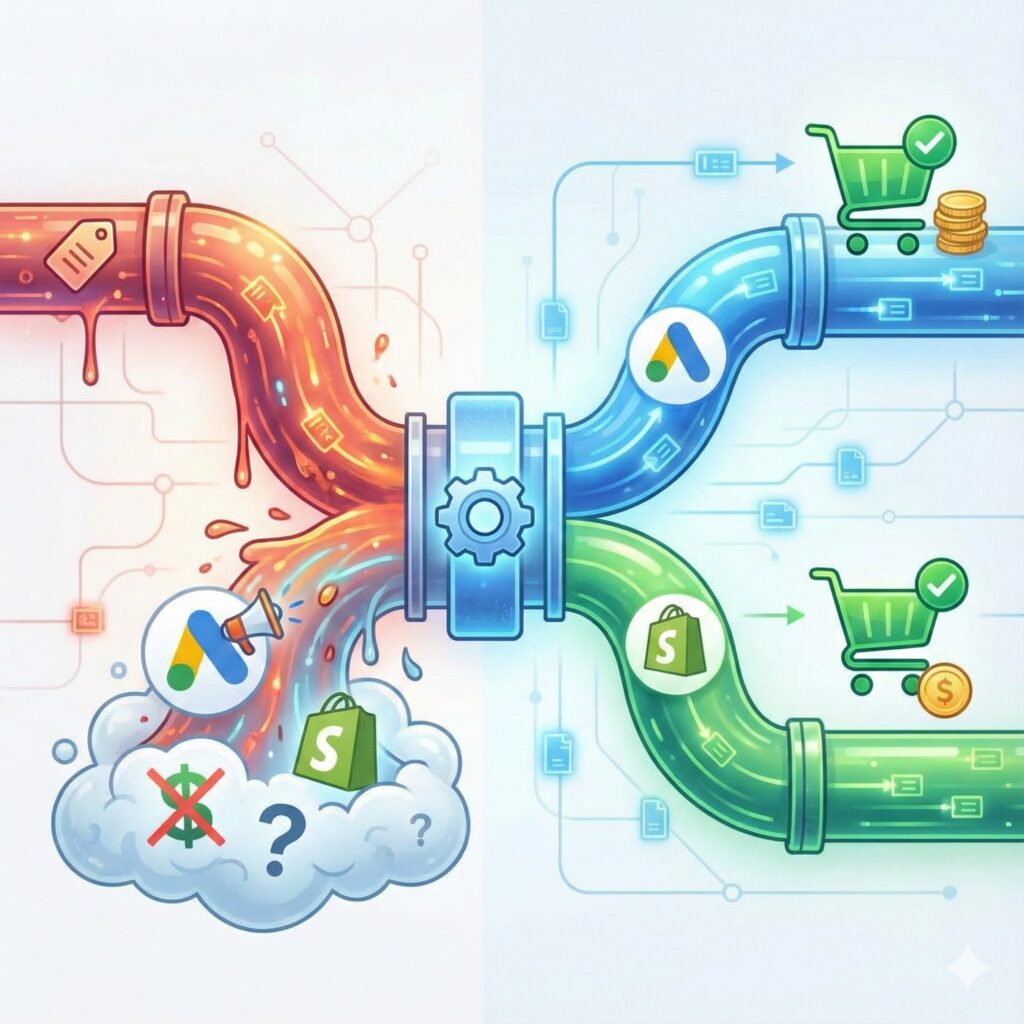
How to Pressure-Test Growth When It Feels Fragile or Stuck
Using constraint-based thinking to surface hidden risks before committing to growth decisions.
Most growth teams do not struggle because they lack ideas.
They struggle because decision making defaults to familiar levers, like channels that once worked, playbooks that feel safe, and metrics that look acceptable on the surface.
Over time, this creates fragile growth. Revenue concentrates, CAC rises quietly, and teams stay busy without being certain which efforts truly matter. Everything feels important, but very little feels decisive.
When growth feels stuck, fragile, or circular, I rely on a small set of thought experiments to pressure test the business. These are not frameworks to adopt or tactics to apply. They are deliberate constraints designed to remove comfort and force clearer thinking.
The goal is simple: to surface where growth is structural, where it is accidental, and where the business is more fragile than it appears.
Used correctly, these thought experiments help reset perspective before jumping to solutions.
How to Use These Thought Experiments
These thought experiments are most useful when planning feels stuck, overwhelming, or circular, when the same ideas keep coming up, and when everything feels important but priorities remain unclear.
Pick one experiment at a time. Treat the constraint as real, even if it feels uncomfortable or unrealistic at first. The value is not in finding the most optimistic answer or solving the scenario perfectly. It is in seeing what breaks, which assumptions surface, and which levers suddenly matter more.
You can run these:
On your own, as a way to pressure test your thinking
With a growth or leadership team during planning discussions
As part of quarterly reviews or strategy resets
Do not rush through them. Sit with the constraint long enough for default answers to run out. That is usually where the real insight appears.
Thought Experiment 1
Channel Fragility Constraint
What if your top acquisition channel became unavailable, saturated, or unscalable?
Assume your highest-impact channel can no longer be relied on, whether due to policy changes, account issues, rising costs, saturation, or diminishing returns. Not less efficient. Not temporarily down. Unavailable as a growth lever.
This constraint exists to expose concentration risk. Many businesses believe they are diversified, but in practice a large share of revenue is often driven by a single channel that has been working well enough to avoid scrutiny.
What this reveals:
Growth can look stable while quietly depending on a single point of failure.
To understand how fragile or resilient growth really is, sit with these questions:
Concentration risk: What percentage of revenue is effectively dependent on this channel?
Recovery time: How long would it realistically take to replace this volume if the channel disappeared?
Demand independence: Are other channels truly independent, or are they harvesting the same underlying demand?
Untested leverage: If channel expansion became the focus for a quarter, which channels have never been deeply tested or scaled?
Hidden opportunity: Which channels showed early promise but were deprioritised because the primary channel kept working?
This experiment is not about abandoning a strong channel. It is about understanding whether growth is resilient or brittle. Dependency often hides behind blended performance and acceptable averages.
Channel fragility often becomes visible only when budgets are forced to move, which is why disciplined budget allocation matters as much as channel discovery.
The shift here is from borrowed growth to engineered growth.
Thought Experiment 2
Acquisition Constraint
What if you had to grow without adding any new top-of-funnel demand for the next three to six months?
Assume your acquisition budget stays the same, but you are not allowed to unlock growth by expanding awareness, targeting new audiences, or adding fresh prospecting channels. No new demand at the top. Growth has to come from what already exists.
In practice, this removes two of the four ways revenue typically grows: expanding top-of-funnel demand within existing audiences and unlocking entirely new ones. That leaves conversion efficiency and customer value expansion as the only remaining levers.
This constraint exists to expose acquisition dependency. Many teams continue pushing top-of-funnel activity even when efficiency is declining, existing audiences are saturated, or downstream conversion and retention are underdeveloped. Acquisition feels productive, but it often hides missed leverage elsewhere in the system.
To understand where growth would actually come from, consider:
Repeat reliance: How much current revenue comes from repeat behaviour versus first-time conversion?
Dormant demand: Where does meaningful interest already exist but fail to convert?
Efficiency gaps: Which funnel stages show the lowest lift relative to effort today?
Value expansion: If average order value or lifetime value had to increase, where would it realistically come from?
Audience ceiling: At what point would optimisation stop working and signal saturation?
This thought experiment is not an argument against acquisition. It is a way to test whether growth is balanced across demand creation, conversion, and value expansion. If the business cannot grow meaningfully without adding new demand, it may be over-invested in awareness and under-invested in efficiency. If, on the other hand, no amount of optimisation moves the needle, the constraint may reveal that it is time to explore new segments rather than push harder on the same ones.
This is where understanding retention economics and how value compounds across the lifecycle becomes critical, especially when acquisition can no longer do the heavy lifting.
Thought Experiment 3
Differentiation & Value Constraint
If someone copied you or sold it much cheaper, would demand materially change?
These thought experiments force an honest look at positioning, product marketing, and brand narratives. You can run either one independently, but they are most powerful when considered together.
They expose a question many teams avoid: whether your differentiation is real, and whether the value you claim is strong enough to influence choice when convenience, familiarity, or price are no longer doing the work.
While these scenarios may sound like product questions, they often reveal more about marketing than product itself. They test how clearly value is articulated, how consistently it is reinforced, and whether the story around the product actually resonates in the market.
Scenario A: Feature-for-feature copycat
Assume a competitor replicates your product overnight. Same features. Comparable quality. Similar pricing. Nothing obvious to point to as “better.”
Under this constraint, differentiation cannot come from capability alone. It has to come from narrative, trust, clarity, or emotional resonance.
To understand how defensible your differentiation really is, consider:
Narrative strength: If features and price disappeared, how would you explain why a buyer should choose you?
Defensibility: Which aspects of your brand, experience, or point of view would be hard to replicate quickly?
Over-reliance: Where are you relying too heavily on product detail to do the work of positioning?
Marketing role: What would marketing need to emphasise more if product parity became the norm?
This scenario reveals whether your differentiation lives in the product alone, or whether it is supported by a story that makes the product harder to replace.
Scenario B: Free or significantly cheaper alternative
Now assume the product becomes free, or dramatically cheaper in the market at a much lower price. Acquisition should, in theory, become easier. If it does not, price may not be the real barrier.
Under this constraint, friction often shifts from cost to trust, clarity, relevance, or perceived importance.
To understand where value is breaking down, consider:
Residual friction: If price dropped and adoption did not rise, what hesitation would remain?
Value clarity: Which parts of the value proposition resonate internally but fail externally?
Segment contrast: Do certain segments recognise the problem you solve more clearly than others?
Proof signals: Which narratives or experiences most effectively communicate why the product matters?
Together, these scenarios test whether your positioning can survive outside favourable conditions. If value disappears when features blur or prices fall, differentiation may exist on paper but not in the buyer’s mind.
The shift here is from feature-led differentiation to narrative-led differentiation.
Thought Experiment 4
Focus & Leverage Constraint
What actually deserves focus now and next?
Marketing is a constant series of trade-offs, but many teams avoid making real choices. They spread effort across too many initiatives, hoping volume will compensate for lack of focus. The result is activity without leverage.
This constraint forces clarity by removing the option to pursue everything at once. It is useful to run in two distinct ways, depending on the planning horizon.
Quarterly focus
Assume only two initiatives can meaningfully succeed this quarter. Everything else must wait.
Under this constraint, the goal is not to identify what sounds important, but what would actually move the primary business outcome in a short window.
Consider:
True priorities: If only two initiatives could be resourced properly, which would they be?
Explicit trade-offs: What would you choose not to do as a result?
Ownership: Which metrics would you hold yourselves accountable to for each bet?
Signal vs noise: Where does effort feel spread thin without clear ownership or payoff?
This version of the constraint exposes prioritisation gaps and surfaces where teams are confusing motion with progress.
Annual leverage
Now extend the horizon. Assume you are making a small number of long-term bets intended to compound over the next twelve to eighteen months. These are not quarterly optimisations, but bigger bets designed to build advantage over time through positioning, distribution, retention, or brand.
Here, the question shifts from immediacy to leverage.
Consider:
Compounding bets: Which initiatives would still matter a year from now if executed well?
Asymmetry: Where could small effort produce disproportionate long-term impact?
System building: Which systems, narratives, or distribution advantages become stronger the longer they are invested in?
Regret test: What would you regret not starting earlier if you looked back a year from now?
This version of the constraint reveals whether long-term thinking is present, or whether planning is dominated by short-term optimisation.
Taken together, these two perspectives clarify what deserves focus now and what deserves patience. If everything is a priority, nothing truly is. Growth becomes more effective when effort is concentrated where leverage exists.
Why this constraint matters
Focus is not about doing less for the sake of simplicity. It is about choosing where limited time and attention will create the most impact. This constraint forces teams to confront trade-offs directly, rather than letting them accumulate quietly.
The shift here is from activity to leverage.
Thought Experiment 5
Perception & Narrative Constraint
What story is actually being told about you, and is it the one you want?
Perception forms long before a buyer reaches a landing page or pricing screen. It is shaped by fragments: what they hear, what they notice, and what gets repeated when your brand comes up casually.
This constraint asks you to step outside internal narratives and look at the business through the lens of how it is actually experienced. Not what you intend to communicate, but what reliably comes through.
To pressure-test perception, look at it from three angles.
Potential buyers
Imagine someone encountering your product for the first time, with limited context and plenty of alternatives.
Consider:
Clarity: How clearly can they describe what you do and who it is for?
Early hesitation: What hesitation or doubt is most likely to surface early?
Friction: What causes them to pause rather than proceed?
This view exposes clarity gaps and early friction that often go unnoticed internally.
Core customers
Now shift perspective to people who already use and value the product.
Consider:
Advocacy: How would they explain the value to a friend?
Differentiation: What do they believe you solve better than alternatives?
Loss test: What would they genuinely miss if the product disappeared?
This reveals where advocacy is strong, and where perceived value may be narrower than assumed.
A trusted brand advocate
Finally, imagine choosing one trusted brand advocate to represent your brand publicly, without a script or incentive.
Consider:
Representation: Who would you trust to speak about the product in their own words?
Storyline: What would they naturally tell?
Alignment: Does that story align with the perception you want to build?
This constraint forces clarity on the narrative you are actually reinforcing, not the one you hope exists.
The shift here is from intended messaging to lived perception.
Thought Experiment 6
Leadership Alignment
Where might leadership disagree, and why?
Most growth strategies do not fail because they are poorly designed. They fail because misalignment surfaces late, often after time, budget, or credibility has already been spent.
This constraint asks you to pressure-test alignment before execution begins. Not by seeking consensus, but by anticipating friction.
Imagine presenting the growth direction to the CEO, founder, or leadership team. Where would they push back? What would make them uncomfortable? Which assumptions would they question first?
To run this constraint honestly, consider:
Friction points: Which part of the plan would trigger hesitation or debate?
Trade-offs: What would leadership want deprioritised?
Assumption risk: Which assumption, if challenged, would weaken the plan?
Failure clarity: What does success and failure look like under this strategy?
This is not about defending the strategy. It is about strengthening it.
Strong alignment is built by making trade-offs explicit, clarifying risk, and defining what success and failure look like in advance. When disagreement is addressed early, decisions move faster and execution becomes more focused.
Why this constraint matters
Alignment is not agreement. It is shared understanding of priorities, risks, and trade-offs. Without it, even strong strategies stall. With it, teams move with confidence and speed.
The shift here is from post-hoc alignment to pre-emptive clarity.
These thought experiments are not designed to produce perfect answers or neat plans. They are meant to create the right kind of conversations, the ones that surface hidden assumptions, force trade-offs, and challenge comfortable defaults.
You can pair them with tactical planning later. Their real value is earlier, when growth feels noisy, fragile, or harder to explain than it should be. If the constraints feel uncomfortable, they are probably doing their job.